Siding | Faze Construction Blog
Think your Fort Wayne home may have asbestos siding? Learn how to recognize it, why ordinary tear-off methods can be dangerous, and when professional removal or encapsulation may be appropriate.
Call (260) 226-8800Asbestos siding is still found on many older homes throughout Fort Wayne and Northeast Indiana. It was once considered a durable, fire-resistant exterior product, but today it creates special concerns whenever a homeowner wants to repair, remove, or cover the existing siding.
The siding itself is not automatically an emergency. The greatest risk occurs when asbestos-containing material becomes damaged, cut, drilled, sanded, broken, or otherwise disturbed, allowing microscopic fibers to become airborne. Breathing those fibers can contribute to serious illnesses, including asbestosis, lung cancer, pleural disease, and mesothelioma.
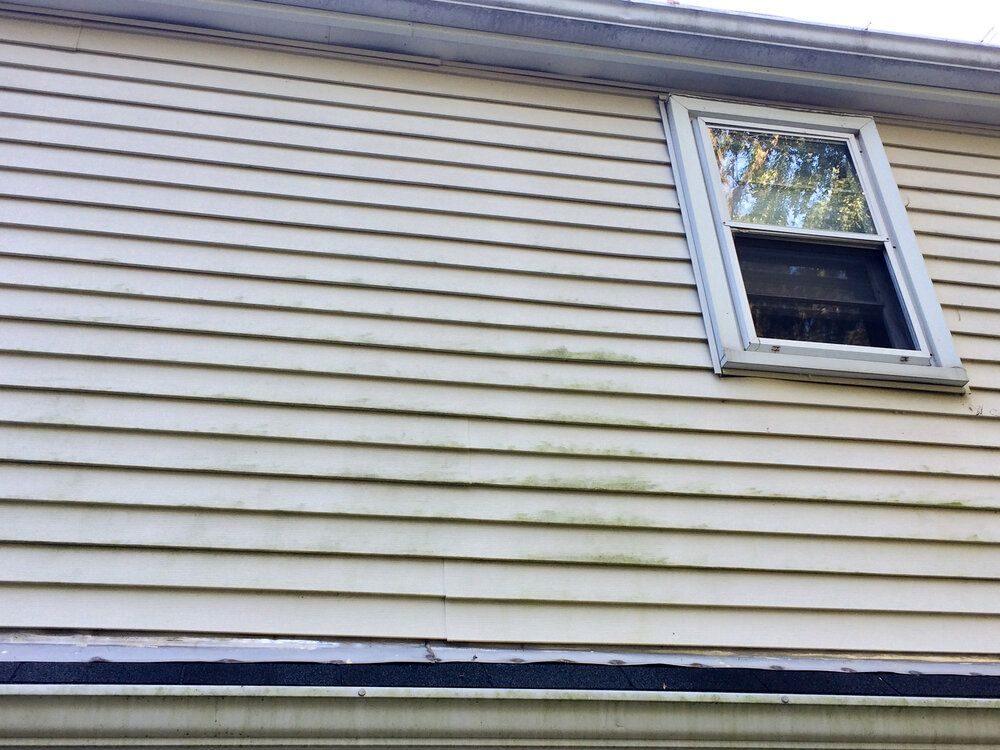
That means asbestos siding cannot be approached like an ordinary vinyl or wood siding tear-off.
Asbestos is a naturally occurring mineral made of extremely small, durable fibers. Because it resists heat, fire, electricity, and chemical damage, it was added to many twentieth-century building products, including cement siding shingles.
Asbestos-cement siding is generally a mixture of cement and asbestos fibers pressed into rigid shingles or panels. When intact, it is usually considered a nonfriable material, meaning it cannot easily be crushed into powder by hand. However, aging, storms, improper removal, drilling, cutting, and breakage can cause even nonfriable materials to release asbestos fibers. Indiana identifies cement siding and transite shingles as Category II nonfriable asbestos-containing materials that may become hazardous when weathered, crumbled, pulverized, or reduced to powder.
Asbestos-cement siding commonly appears as:
Many asbestos siding shingles are approximately 12 by 24 inches, although sizes and patterns vary.
Appearance alone is not enough to confirm asbestos. Fiber-cement siding, old cement board, and other products can look nearly identical. The only reliable way to confirm whether siding contains asbestos is through proper sampling and laboratory analysis by a qualified professional.
Do not break off a piece yourself simply to have it tested. That is the exact type of disturbance homeowners should avoid.
Asbestos siding that remains intact, stable, and undisturbed may not need to be removed immediately. Indiana's Department of Environmental Management advises that asbestos-containing materials in good condition, without peeling, cracking, crumbling, powder, or dust, are often best left alone.
Problems become more likely when the siding is:
The health concern is not merely touching an intact panel. It is releasing fibers into the air and inhaling them.
A standard siding project may involve pulling panels from the wall, tossing debris into a dumpster, cutting around windows, and removing stubborn sections with hand or power tools.
Those methods cannot simply be transferred to confirmed asbestos-cement siding.
OSHA classifies the removal of asbestos-containing siding shingles as Class II asbestos work. For exterior cementitious asbestos siding, OSHA prohibits cutting, abrading, or breaking the panels unless a safer method cannot be used. Panels must be wetted before removal and carefully lowered, bagged, or wrapped rather than dropped from the wall.
A controlled project may require:
The exact requirements depend on the building, siding condition, project scope, who performs the work, and the laws that apply to that property. Indiana regulates asbestos inspection, licensing, emissions, work practices, and disposal, although certain exemptions may apply to small residential buildings.
The most complete approach is to have the asbestos-containing siding removed using proper asbestos work practices.
This may make sense when:
Removal provides access to the wall beneath the siding. That allows the contractor to inspect sheathing, framing, moisture damage, flashing, and other hidden conditions before installing the new exterior system.
The disadvantage is cost and complexity. Specialized labor, protective measures, packaging, disposal, and regulatory compliance can make asbestos removal substantially more involved than an ordinary siding tear-off.
Faze Construction can help evaluate the exterior project and coordinate with qualified asbestos professionals when specialized abatement is required.
When asbestos siding is intact and the underlying wall is suitable, another possibility may be to leave the siding in place and install a properly designed covering system over it.
In simple terms, encapsulation means isolating the asbestos-containing material so it remains protected and is not readily disturbed. For an exterior remodeling project, this may involve installing an approved barrier and new siding system over the existing material.
The advantage is that intact panels do not have to be removed and handled.
However, covering asbestos siding does not make the asbestos disappear. It remains part of the house and should be documented for future owners and contractors.
A layover may not be appropriate when:
This is why simply saying, "We can cover it," is not enough. The contractor must first determine whether the existing wall can support a safe, functional, and warrantable siding system.
One of the largest risks of covering old siding is that the visible exterior may hide damaged wood.
Older asbestos siding may have protected a home for decades, but leaks can still develop around:
If the sheathing behind the siding is rotted, mold-damaged, soft, or no longer capable of holding fasteners, installing another siding system over it will not solve the underlying problem.
At Faze Construction, we evaluate accessible areas for signs of moisture and structural deterioration before recommending a layover. If the wall does not provide a reliable fastening surface, removal and repair may become necessary.
In one sense, yes.
Encapsulation can be a practical and responsible solution when the material is stable and the wall system is suitable. However, it also leaves the asbestos-containing material for a future homeowner or contractor to manage.
That does not automatically make encapsulation a bad decision. It means homeowners should make the decision knowingly.
Consider:
The best solution depends on the condition of the siding, the intended use of the home, the construction of the wall, and the homeowner's long-term plans.
Homeowners should not:
Asbestos fibers are too small to see, and ordinary renovation activity can expose workers, residents, neighbors, and future occupants when the material is handled improperly.
Start with these steps:
Faze Construction helps homeowners throughout Fort Wayne and Northeast Indiana understand the complete exterior system, not just the visible siding.
Our process can include:
We do not believe every asbestos-sided home needs the same solution. Some homes may qualify for a properly designed encapsulation system. Others require removal before a safe and durable exterior can be installed.
The first step is determining what is actually on the house and what condition exists behind it.
Suspecting asbestos siding does not mean you need to panic, but it does mean the project should be handled carefully.
Before you remove, drill, cover, or replace the siding, have the exterior evaluated by a contractor who understands wall systems, moisture protection, fastening requirements, and the special concerns surrounding asbestos-containing materials.
Faze Construction serves homeowners in Fort Wayne, New Haven, Huntertown, Leo-Cedarville, Grabill, Auburn, Columbia City, Roanoke, Decatur, Bluffton, Huntington, Ossian, Churubusco, and surrounding Northeast Indiana communities.
Schedule an exterior inspection with Faze Construction to determine whether removal, repair, or encapsulation makes the most sense for your home.
Related service: Siding in Fort Wayne | See your price range on the Pricing page
Asbestos is a naturally occurring mineral made of extremely small, durable fibers. Because it resists heat, fire, electricity, and chemical damage, it was added to many twentieth-century building products, including cement siding shingles.
Many asbestos siding shingles are approximately 12 by 24 inches, although sizes and patterns vary.
Asbestos siding that remains intact, stable, and undisturbed may not need to be removed immediately. Indiana's Department of Environmental Management advises that asbestos-containing materials in good condition, without peeling, cracking, crumbling, powder, or dust, are often...
4.9 stars from 257 Google reviews. Here is what Fort Wayne homeowners said in their own words.
“Faze inspected my roof and found storm/hail damage and was able to work with my insurance company to get new roof installation. Faze worked for my benefit and provided excellent service. Faze went the extra mile every step of the process and ensured that I was informed and answered any questions that I had along the way. I would recommend them to my closest friends and family!”
Richard Short
“Faze Roofing and Construction came out and gave us an inspection and quote the same day. They were out the next week right before Thanksgiving and had the roof completed within a day. Super happy with the professionalism and work that was done. Their pricing was super competitive! We look forward to using them for our Christmas lights this winter and in the future!”
Maegen Barbour
Tell us about your home and your project. The form takes about two minutes, and a Faze team member follows up to confirm your inspection time.
Your inspector takes photos of what they find, walks you through them, and leaves you with a written quote. You decide what happens next.
★ 4.9, 257 Google reviews
See your price range in about a minute, then book a free inspection and get your exact written quote.